
Most refrigerator leaks come from a short list of sources:
- a clogged or frozen defrost drain
- a cracked or out-of-place drain pan
- a loose or damaged water line or inlet valve (on models with an ice maker or dispenser)
- a water filter that isn’t seated properly
- a fridge that isn’t tilted back enough to drain
Condensation from a worn door seal can also look like a leak. Where the water shows up is the quickest way to tell these causes apart, so start there. Unplug the fridge before you do anything more than look.
First, where is the water coming from?
First, rule out a spill. Samsung notes that many puddles are really condensation or something spilled, and a dropped ice cube can melt into a convincing puddle. Wipe everything dry, then watch where the water comes back.
| Where you find the water | Most likely causes | What to check first |
|---|---|---|
| Under the crisper drawers in the fresh-food section | Clogged or frozen defrost drain (a typical sign on top-freezer models), or heavy condensation | Dry it, keep the doors closed, and check again after 24 hours |
| Ice or water on the freezer floor | Clogged or frozen defrost drain (side-by-side and bottom-freezer models) | Your owner’s manual. This is usually a service call |
| A puddle at the front, under the doors | Defrost water backing up inside and running out under the door seal, a leaking dispenser water line, or a fridge that isn’t tilted back | Look inside for pooled water or ice before blaming the door seal |
| Behind the fridge | Water supply line, its fittings, the shut-off or saddle valve, or the fridge’s water inlet valve | Turn off the water and inspect the line and connections |
| Under the middle of the fridge | Drain pan cracked, slipped out of position or overflowing | Whether the pan is in place, flat and intact |
| Only after you use the dispenser | Filter connections, the water line in the door, or air in the line after a filter change | When exactly the drip happens |
| Around the water filter | Filter not fully seated, a worn or missing O-ring, a cracked housing, or an incompatible filter | Remove the filter and reinstall it |
A puddle at the front is often misread. GE says it usually isn’t the door seal but a sign of a blocked drain line.
Common causes of a refrigerator leaking water
Clogged or frozen defrost drain
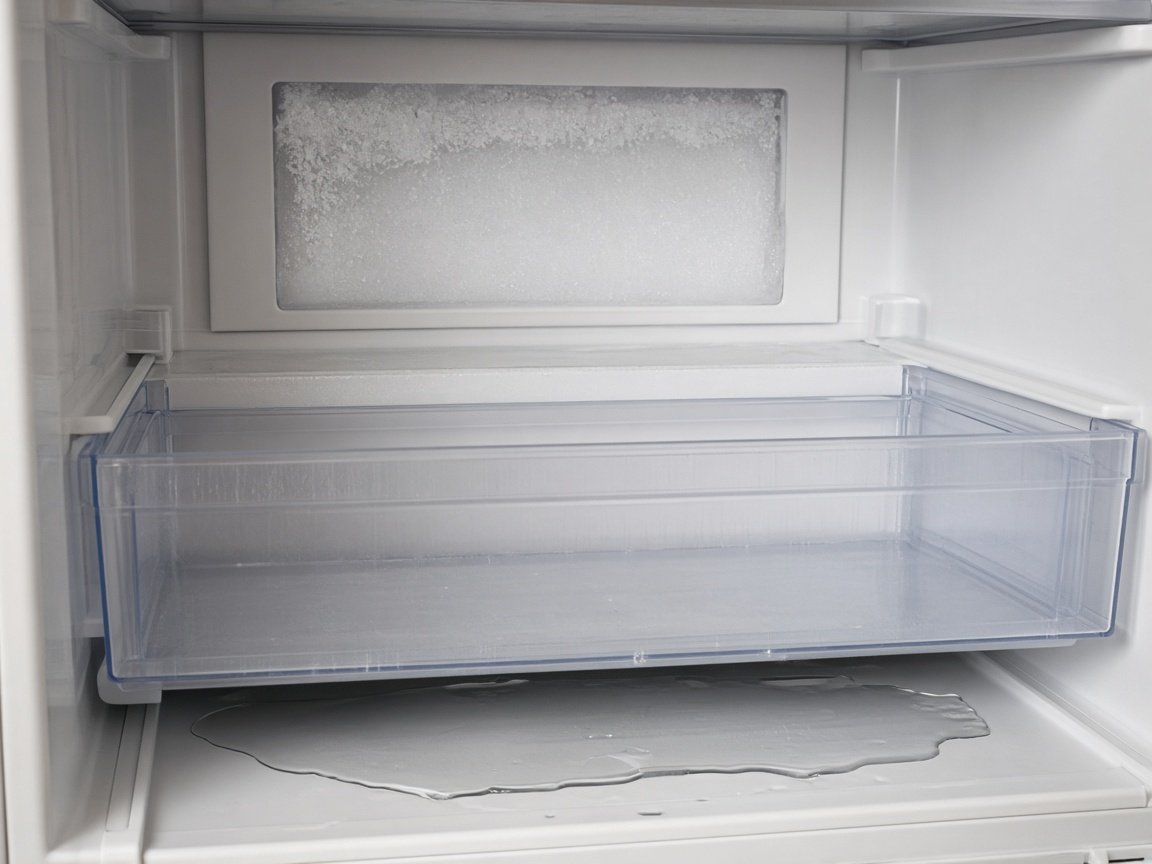
Frost-free fridges regularly melt the frost off the evaporator coil. The water flows into a drain, usually at the back of the freezer, and down a tube to a drain pan under the fridge, where it evaporates. If food debris or ice blocks the drain, the water backs up. On top-freezer models it collects under the crisper drawers. On side-by-side and bottom-freezer models you’ll often find ice on the freezer floor. Eventually it can run out under the door seal and onto the floor.
Safe check: Look for water or ice at the back of the freezer floor or under the crisper drawers, and make sure stored food isn’t covering the drain. Whether you can clear the drain yourself depends on the model. GE says some side-by-side models can be cleared by following the owner’s manual, but most top-freezer and bottom-freezer models need service. Whirlpool and Samsung both recommend a professional for a blocked drain. A drain that refreezes after clearing can point to a defrost-system fault a technician should check. Heavy frost also hurts cooling, which our guide to why a fridge stops cooling covers.
Cracked, displaced or overflowing drain pan
Water under the centre of the fridge often points to the drain pan. GE suggests checking that the pan sits flat and hasn’t slipped or cracked. According to Samsung, a full pan means the water isn’t evaporating (cool or very humid rooms slow this down), while an empty pan with water on the floor suggests the pan is damaged. A loose pan can also rattle, one of the sounds explained in our guide to what different refrigerator noises mean.
Safe check: With the fridge unplugged, use a flashlight to see whether the pan is in place and intact. If you would need tools to reach it, leave it to a technician.
Water supply line, shut-off valve or water inlet valve
Fridges with an ice maker or dispenser connect to your plumbing, and water behind the fridge usually comes from this side. Whirlpool lists cracked or kinked lines and loose fittings at the shut-off valve, saddle valve or back of the fridge, and warns that pushing the fridge too far back can pinch the line. GE notes that the fridge’s water valve can stick open and flood, which needs service. Samsung notes that water pressure that’s too high or too low can stop the valve from closing properly, and gives 30 to 130 psi as the range for its models.
Who to call: For a leak in the household line itself, such as a split copper line or a dripping shut-off valve, GE recommends a plumber. For the fridge’s inlet valve or internal tubing, call an appliance technician.
Water filter not seated or damaged
Filter leaks often start right after a filter change. Whirlpool points to a filter that isn’t fully seated or is cross-threaded, a flattened or missing O-ring, a cracked filter head, and non-approved filters that don’t fit properly. Tighten the filter by hand only, because over-tightening distorts the seals. Flush a new filter afterwards, since trapped air can make the dispenser drip. If the leak continues with the filter removed, Samsung says the housing needs service.
The fridge isn’t tilted back
Refrigerators are designed to tilt back slightly so the doors close on their own and the water drains properly, according to Samsung. If the front rollers still touch the floor, the front probably needs raising. Whirlpool notes that the wrong angle can let water spill over the front of the drain pan. Your manual shows how to adjust the leveling legs.
Worn door gasket and condensation
A worn gasket, or doors that are opened often or left ajar, let in moist air. That air condenses and adds extra frost. A 24-hour test helps: dry the area under the crisper drawers, keep the doors closed, and check again. If water is back, it’s likely a leak. If the area stayed dry at first and only gets wet later, condensation is more likely. To test the seal, Samsung suggests closing the door on a dollar bill or a sheet of paper and pulling it out. You should feel slight resistance; if it slides out easily, clean the gasket and try again, and if the gasket is warped or torn it needs replacing. A fridge set too warm can also add to condensation, so check the temperature setting against your owner’s manual.
Ice maker and dispenser
GE lists loose water-line fittings, a leaking water valve and the ice maker’s fill tube as common sources. A few drops after you dispense water are normal, according to Samsung, but steady dripping is not. We’ll cover these faults in a dedicated guide.
Safe checks you can do yourself
These steps are for looking and confirming, not for taking the fridge apart.
- Deal with the water. Wipe up the puddle and put down towels. Wet floors are a slip hazard, and standing water can damage flooring.
- Unplug the fridge. GE advises this before any maintenance to reduce the risk of shock. If the outlet or cord is wet, don’t touch it. Switch off the circuit at the breaker if you can do so safely, or call an electrician.
- Turn off the ice maker, then the water supply. The shut-off valve is often under the kitchen sink, but it can also be in a basement, a crawl space or behind the fridge.
- Dry the area and watch it for 24 hours, and rule out spills from food containers.
- Look with a flashlight at the supply line, its fittings and the drain pan.
- Reseat the water filter (hand-tight only), then check the tilt and the door seals.
Don’t remove the evaporator cover or rear panels. Don’t chip at ice with knives or picks, because the coil and refrigerant tubing puncture easily and that damage needs a professional sealed-system repair. Don’t use heat guns or open flames inside the fridge, and leave wiring and control boards alone. Plug the fridge back in only once everything is dry.
When to call a refrigerator repair technician
Book a technician when:
- water returns after you’ve dried everything and waited 24 hours
- there’s ice on the freezer floor, and your manual doesn’t describe how to clear the drain yourself
- the inlet valve seems stuck open, or water keeps running into the ice maker
- the filter housing is cracked, or the leak continues with the filter removed
- the drain pan is cracked or sits behind panels
- the leak comes with poor cooling or heavy frost
- water has reached the outlet or electrical parts
A technician offering refrigerator repair service in Prince George can trace the water to its source and fix the underlying fault rather than just the puddle. If your fridge is older and you’re weighing a repair against a replacement, our guide to appliance repair costs and when replacing makes more sense can help you decide.
Mistakes that make a leak harder to fix
- Replacing the door gasket for a front puddle before checking for a blocked drain inside.
- Leveling the fridge perfectly flat. It needs a slight backward tilt to drain.
- Pushing the fridge hard against the wall, which can kink the water line.
- Chipping out ice with a sharp tool, which risks puncturing the sealed system.
Frequently asked questions
Is a leaking refrigerator dangerous?
The water usually isn’t the main danger. The risks are a slippery floor, damaged flooring, and water reaching the plug, outlet or electrical parts. Unplug the fridge before inspecting, and if water is near the outlet, cut power at the breaker if you can do it safely.
Why does my fridge only leak sometimes?
Water is produced during the defrost cycle, so a partly blocked drain may overflow only after a defrost, or after a lot of door openings. If it drips only after you use the dispenser, look at the filter, the door water line, or air in the line after a recent filter change.
Should I keep using a leaking fridge?
A small leak may be manageable short-term if all of these are true:
- the fridge is still cooling normally
- no water is near the plug, outlet or other electrical parts
- the leak is slow and isn’t spreading
- you can keep the floor dry
If the leak is on the supply side, turn off the water to the fridge. Either way, arrange a repair soon rather than living with it, because a leak that seems minor can still damage flooring or get worse. If water is spreading, coming back quickly or reaching the outlet, unplug the fridge and call for service.
My fridge has no water line. Why is it leaking?
Every frost-free fridge makes water when it defrosts. A clogged drain, a damaged drain pan, the wrong tilt, or condensation from worn seals can cause a leak without any plumbing involved.
Get a leaking refrigerator fixed
If the water keeps coming back or the source isn’t obvious, a technician can find the cause before it damages your floor or your food. Call (778) 761-2378 or book your refrigerator repair appointment online, and tell us where you’re finding the water. It helps narrow down the cause before the visit.