A washing machine not draining or spinning most often comes down to a blocked water path, such as a kinked drain hose, a clogged pump filter or a blocked house drain. The other common cause is something that stops the spin from starting: an unlatched lid or door, an unbalanced load, or too many suds. You can check several of these safely yourself. A failed drain pump, lid lock or drive belt is a job for a technician.
Unplug the washer first, then work through the checks below from easiest to hardest.
Not draining vs. not spinning: why they’re usually connected
Most washers pump the water out before they spin, and many won’t start a high-speed spin while water is still in the tub. So a drain problem often looks like a spin problem, with clothes left soaking at the end of the cycle. It works the other way too: if the washer can’t lock the lid or balance the load, it may stop before the drain and spin stage.
A pause isn’t always a fault. GE notes that its full-size top-loaders can pause for up to three minutes before pumping out, so give the cycle a few minutes before deciding something is wrong.
| What you see | What it can point to |
|---|---|
| Tub still full of water after the cycle | Drain hose, pump filter, house drain, drain pump, lid switch (top-loaders) |
| Water drained, but clothes soaking | Unbalanced or very small load, a slow-spin cycle, too many suds, a drive problem |
| Fills and drains at the same time | Drain hose too deep in the standpipe or sealed airtight (siphoning) |
| Water backs up out of the standpipe | A clog in the home’s drain, not the washer |
| Motor runs but the tub won’t turn | Drive belt or another drive part, which needs service |
| Error code or flashing light | Check your manual, because codes differ by brand and model |
Common causes of a washing machine not draining or spinning
Drain hose kinked, clogged or installed wrong
What it looks like: water left in the tub, slow draining or a long-drain code.
Why: the pump can’t push water through a pinched or blocked hose. A hose set too deep, or sealed into the pipe, can also siphon water.
Safe check: with the washer unplugged, look along the hose for kinks or damage. Specs differ by brand. Whirlpool says its top-load hoses shouldn’t go more than 4.5 inches (114 mm) into the standpipe, while Samsung specifies 6 to 8 inches. Both say the hose shouldn’t be sealed airtight. Follow your own installation instructions. Samsung also says a damaged hose needs service.
Clogged drain pump filter (front-loaders)
What it looks like: a front-loader that drains slowly or not at all, sometimes with a filter or drain code.
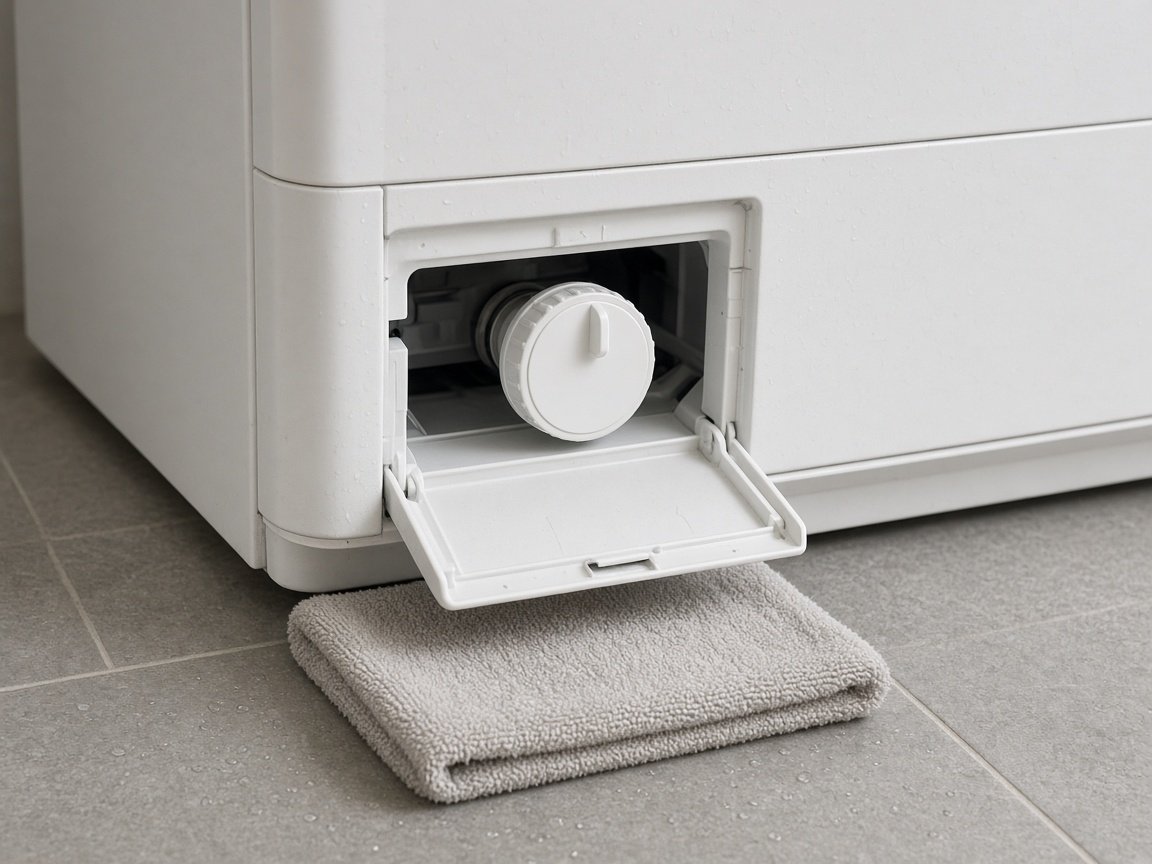
Why: many front-loaders have a pump filter, also called a debris filter or coin trap, behind a small panel at the bottom front. It catches lint, coins and buttons before they reach the pump. When it’s packed with debris, water can’t get out.
Safe check: on most front-loaders this is a normal owner task, but water will come out when you open the filter. Follow the draining steps below and your manual. Samsung notes that its top-loaders don’t have a removable pump filter.
Blocked house drain or standpipe
What it looks like: the washer pumps, but water backs up out of the standpipe or laundry sink.
Why: GE notes that the drain itself, rather than the machine, can be what stops the water.
Safe check: if water backs up out of the pipe, it’s a plumbing problem. A plumber’s snake or a plumber is the next step, not a washer repair.
Failed or jammed drain pump
What it looks like: the hose, filter and house drain are all clear, but the washer still won’t pump out. You may hear a hum, or nothing at all.
Why: something may be jammed in the pump, or the pump may have failed.
Safe check: stop once you’ve cleaned the accessible filter. Reaching the pump means removing panels near wiring and water, so leave that to a technician.
Lid switch or door lock
What it looks like: the washer fills, and may agitate, but won’t drain or spin. Or the door stays locked.
Why: the lid switch or door lock tells the control it’s safe to spin. GE says none of its top-loaders will spin with the lid up. Whirlpool notes that front-load doors stay locked while the water level or temperature is high or the drum is moving, and that lint or detergent build-up can stop a lid from locking.
Safe check: close the lid or door firmly and wipe the latch area clean. If it still won’t lock or unlock, call a technician. Never tape, prop or bypass a lid switch or door lock.
Unbalanced load, a small load or one heavy item
What it looks like: the washer shakes, slows or stops spinning, or shows a balance code (LG uses UE or Ub).
Why: the out-of-balance sensor stops the spin to protect the machine. LG lists very small loads, single bulky items such as rugs, tangled sheets and a washer that isn’t level as common triggers.
Safe check: spread the load evenly, add a few items alongside a single heavy one, and make sure all four feet are firm on the floor. LG suggests filling the drum to about two-thirds.
Too many suds or the wrong detergent
What it looks like: visible foam, long rinses, a suds code (Whirlpool uses Sud or Sd) or a wet load.
Why: Whirlpool says excess suds can stop a washer pumping and spinning. Non-HE detergent, too much HE detergent and “no-splash” bleach can all cause it.
Safe check: let the extra rinse finish, run a rinse and spin, and measure HE detergent from then on.
Worn drive belt or motor coupling (some models)
What it looks like: the washer drains and the motor runs, but the tub won’t turn, or turns weakly.
Why: on belt-drive models, GE notes that a loose, worn or broken belt can stop the drum. Some direct-drive top-loaders use a motor coupling instead, which can wear out.
Safe check: there isn’t one from the outside. Reaching these parts means opening the cabinet, so book a technician.
How to safely drain a washer full of water
- Stop the cycle and wait. A locked door may release once the drum stops. Whirlpool says this can take up to five minutes on some front-loaders. Don’t force a locked door or lid.
- Unplug the washer. If water has reached the outlet, plug or cord, don’t touch them. Switch off the breaker only if you can reach the panel without standing in water. Otherwise, call an electrician.
- Let hot water cool. Samsung warns that water drained after a high-temperature cycle is hot.
- Expect more water than you think. Use towels and shallow containers, and keep a second container ready to swap in.
- Front-loaders: open the filter panel at the bottom front. If there’s an emergency drain tube, pull it out, uncap it and let the water run into the container. Then turn the filter counterclockwise to remove it, clear the debris and refit it clockwise until it’s secure. Samsung warns that a filter that isn’t seated properly can leak. Steps vary, so follow your manual.
- Top-loaders: most don’t have an owner-access filter. Bail the water out with a small container, or follow your manual.
When the tub is empty, plug the washer back in and run an empty drain and spin, or rinse and spin, to test it.
Safe checks you can do yourself
- Look up any error code in your owner’s manual.
- Reset the controls by unplugging the washer for five minutes, as Whirlpool suggests.
- Check for a tripped breaker or blown fuse. GE notes that a loss of power will stop the spin.
- Check the cycle you picked. Gentle and delicate cycles spin slowly on purpose.
- Run an empty rinse and spin. LG recommends service if a balance code comes back with nothing in the drum.
When to call a washing machine repair technician
Call a technician when:
- the hose, filter and drain are clear, but the washer still won’t pump out;
- the motor runs but the tub won’t turn;
- the lid or door won’t lock or unlock, or keeps showing a lock code after a reset;
- the same error code keeps coming back;
- you notice a burning smell or water near the controls; or
- the drain hose or its holder is damaged.
Leave anything that involves opening the cabinet, or working on the wiring, motor or controls, to a professional. Our washing machine repair technicians in Prince George diagnose drain and spin faults on major brands. For an older washer facing a big repair, our guide to appliance repair costs and when to replace can help you decide. And if properly spun loads still take ages to dry, the problem may be with the dryer. See our dryer repair service.
Mistakes that make it worse
- Forcing a locked door or bypassing the lid switch.
- Taping the drain hose into the standpipe or pushing it deeper, which can cause siphoning.
- Adding more detergent to “clear” a sudsy load.
- Restarting cycle after cycle with a full tub.
- Opening the pump filter without towels and containers ready.
Frequently asked questions
Why are my clothes soaking wet even though the washer drained?
Check the spin speed first. Whirlpool notes that gentle, delicate and hand-wash cycles use slow spins that leave more water in the load. On a normal cycle, an unbalanced load or excess suds can also reduce the spin. If an empty rinse and spin still won’t reach full speed, have the washer looked at.
Why does my washer fill and drain at the same time?
This can point to siphoning. Whirlpool explains that a hose pushed too far into the standpipe, or sealed in without an air gap, can pull water out while the washer fills.
Can I keep using a washer that drains slowly?
It may be manageable short-term if you’ve fixed a clear cause, such as a straightened hose, a cleaned filter or a measured detergent dose, and an empty test cycle then drains and spins normally. If it’s still slow, shows error codes, or water has come near the electrical parts, stop using it and book a repair soon. A struggling pump can fail mid-cycle with a full tub.
Is a washer that won’t drain worth repairing?
It depends on the cause, the washer’s age and the repair price compared with a new machine. A kinked hose or clogged filter costs little to fix, while a failed pump or drive part is a bigger decision. Our repair-or-replace cost guide explains how to weigh it up.
Book a washing machine repair in Prince George
If your washer still won’t drain or spin after these safe checks, a technician can find the cause. Call (778) 761-2378 or book online.